
The EU reality is simple: compliance must be ready before you scale sales. The right flow: product classification → evidence/tests → technical documentation → labeling → registrations → marketplace uploads. The wrong flow: go live and panic when a compliance case hits.

This is the most critical step. Without a clear definition of product type, intended use, and market-entry model, tests and documents become guesswork. Wrong classification = wrong tests = unnecessary cost.
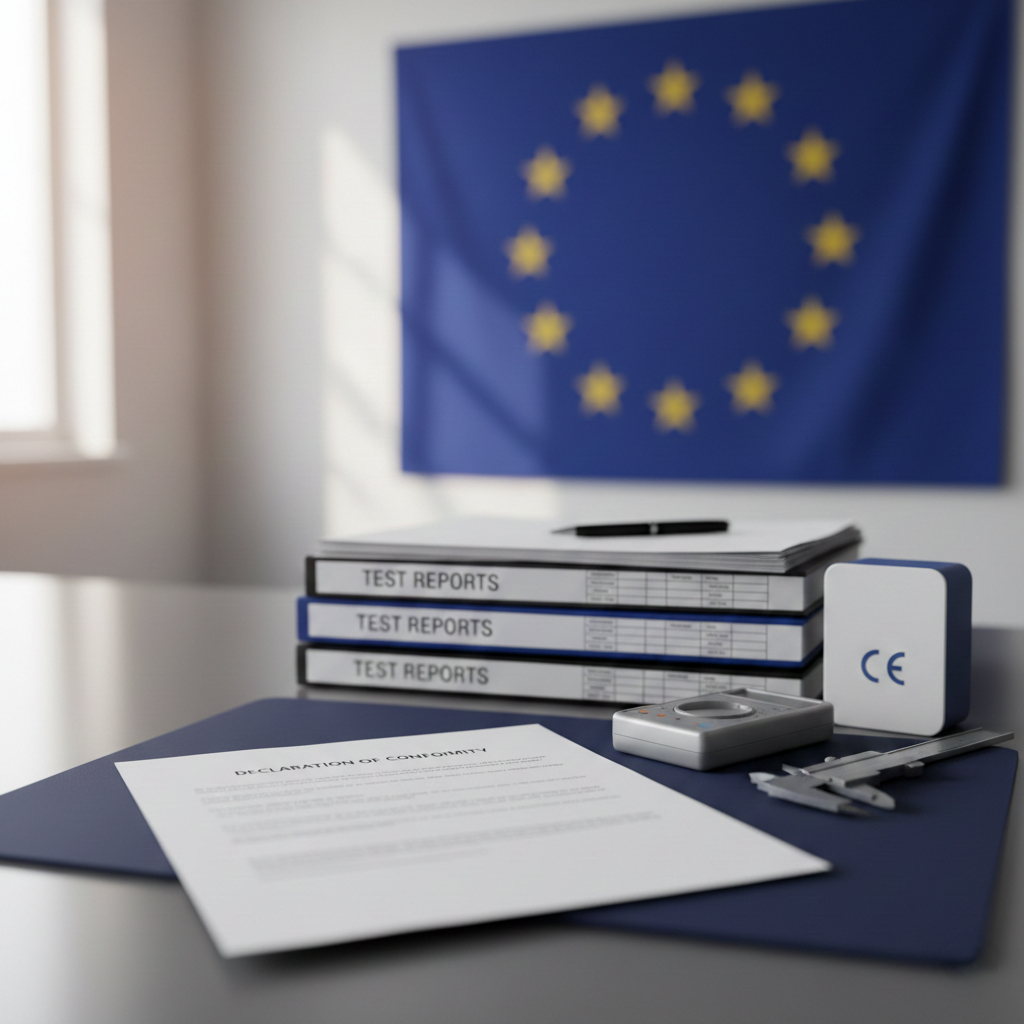
The CE marking is the manufacturer/importer’s declaration that the product meets relevant EU requirements. Behind that declaration must be test evidence, risk assessment, and technical documentation — otherwise CE is just decoration.

The Technical File is the structured package of evidence proving conformity. If you lack version control, have gaps, or show inconsistencies, “we are compliant” looks like a claim — and gets rejected.

REACH requires tracking and information flow (including SVHC obligations). RoHS limits certain hazardous substances in EEE products. Neither is “get a declaration once and forget it”: lists change, materials change, and that’s where real risk shows up.

WEEE imposes registration and take-back/recycling obligations for electrical and electronic equipment. In countries like Germany, selling without proper registration quickly becomes a marketplace and enforcement risk.

The most common audit finding: the label says A, the manual says B, and the marketplace listing says C. Inconsistency is treated as non-compliance. You need master data and controlled approvals.

CE, REACH, RoHS, and WEEE are not “document collecting”. They are a system. Set up properly, growth becomes stable. Set up badly, every scaling attempt turns into a risk multiplier.
If you want to manage your CE dossier, REACH/RoHS verification, WEEE registrations, and Amazon compliance professionally — end to end — work with Grexon.